

1. One glass does not have to decide it.
If your first taste of sake was not for you, think back to what stood out. Was the aroma too strong? Did the alcohol feel sharp? Did the sweetness linger? Each answer gives you a better starting point for the next bottle.
At our brewery shop in Ichinoseki, we talk with people choosing sake for the first time. You do not need specialist tasting words. “I enjoy a fruity aroma” or “I want something to drink with dinner” tells us much more than a request for the most expensive bottle.
Sake can be fragrant, restrained, light on the palate or rich in the savoury flavour of rice. Two bottles carrying the same classification can taste quite different. Temperature can change the impression too. We suggest trying our ginjo-style sake chilled first, then noticing how its aroma opens as the glass warms a little.
2. “Easy to drink” does not always mean sweet.
The words 甘口 (amakuchi, sweet) and 辛口 (karakuchi, dry) are useful clues. They do not describe the whole glass. Aroma, acidity, savouriness, texture and the finish all shape how a sake tastes.
Notice the aroma before choosing a category.
If you enjoy a fruity aroma, our junmai ginjo is one possible starting point. If you prefer a quieter aroma alongside a meal, our junmai sake offers another direction. A more fragrant sake is not automatically easier for everyone to enjoy.
Give the finish a moment.
A sake may feel gently sweet at first and finish cleanly. After a small sip, notice what stays with you. Our sparkling sake is deliberately restrained in sweetness, so bubbles alone will not tell you how sweet it is.
A light mouthfeel does not mean a low alcohol content. Our sparkling sake is 15% ABV. Check the alcohol figure on the label rather than judging from the bottle, the bubbles or how smooth the first sip feels.
3. The label: a few words worth knowing.
On a shop shelf in Japan, you will often see 日本酒 (nihonshu) or 清酒 (seishu) for the drink we are discussing here. You can leave the detailed vocabulary for later. First, find the style, alcohol content, bottle size and storage instructions.
| On the label | What it tells you |
|---|---|
| 純米junmai | Made with rice, rice koji and water, without added brewing alcohol. It does not mean that the sake contains no alcohol. |
| 純米吟醸junmai ginjo | A junmai sake made with ginjo brewing methods. A rice-polishing ratio of 60% or less is one of the classification requirements. |
| 純米大吟醸junmai daiginjo | A junmai sake made with ginjo brewing methods, with a rice-polishing ratio of 50% or less among its requirements. |
| 精米歩合seimai-buai | The percentage of rice remaining by weight after polishing—not the percentage removed. |
| アルコール分 / 度数 | Alcohol content. For example, 15度 means 15% ABV. |
| 内容量 | Bottle volume. Compare 300 ml with 720 ml before ordering. |
| 生酒 / 要冷蔵namazake / yō-reizō | Namazake is sake that has not been heat-treated after production. 要冷蔵 means “keep refrigerated.” Follow the instructions on the particular bottle. |
A polishing ratio of 50% means half the original rice weight remains; 40% means four-tenths remain. The number tells you about a brewing choice. It is not a score for how much you will like the sake. Junmai sake itself has no numerical rice-polishing requirement.
At Sekinoichi, our special junmai uses rice polished to 60%, our junmai ginjo uses Iwate-grown 吟ぎんが (Gin Ginga) polished to 50%, and our junmai daiginjo uses 結の香 (Yui no Ka) polished to 40%. These are our product specifications, distinct from the general classification thresholds.
Rice polishing is one part of how we shape the flavour, alongside yeast and brewing decisions. Our junmai ginjo uses the Iwate yeast ジョバンニの調べ (Giovanni no Shirabe). We value its gently spreading aroma. With Yui no Ka, we aim for a fragrant glass with a little sweetness and a smooth texture.
Classification reference: Japan’s National Tax Agency sake-labelling standards (Japanese).
4. If you want one starting point, try our junmai ginjo.
When someone tells us they do not yet know what they like, we often introduce our junmai ginjo. The Gin Ginga rice, gentle aroma and soft mouthfeel give them something clear to explore.
Chill the bottle, pour a little into a small glass and first notice the aroma. Take a small sip on its own, then try it with food. You do not need a special sake cup: a glass you already own is a good place to begin. A wine glass is another option when you want to explore the aroma.
If you discover that you enjoy fragrant sake, that is already useful. Next time you can try another rice variety or compare the same bottle at a slightly different temperature. There is no need to learn every category before you start.
Read about our 720 ml junmai ginjoJapanese product page · current price and availability are shown there.
5. Bubbles offer another way in.
Well-chilled sparkling sake in a glass can feel familiar if you usually choose sparkling drinks. Our sparkling junmai uses the natural carbonation produced by fermentation, with a restrained sweetness that we also enjoy at the table.
We suggest trying it with fried chicken, cheese or cut fruit. These are starting points from our own guide, not rules you have to follow. Notice how the same glass feels with something salty and with something sweet.
The alcohol content is 15% ABV; this is not a low-alcohol sake. Decide how much you want to pour, and enjoy it slowly.
6. Your first bottle can be a small one.
A 720 ml bottle may feel like a commitment when you are still discovering your taste. A 300 ml bottle gives you another option, especially when fridge space or the amount you plan to drink matters.
Our 300 ml junmai daiginjo is one example. We also offer a two-bottle set containing a 300 ml junmai daiginjo and a 300 ml sparkling junmai. It lets you compare two different styles without choosing two larger bottles.
A small bottle is not a suggestion to finish it in one sitting. Pour the amount that suits you and follow the storage instructions for the rest. Before buying, think about when you will open it and how you will keep it afterwards.
7. Choose for the moment, as well as the flavour.
A quiet meal at home
If dinner is the focus, our special junmai has a restrained aroma and a slightly dry character that we suggest alongside everyday dishes. For a moment when you want to enjoy the aroma of the sake itself, try a little chilled junmai ginjo.
Friends around the table
Sparkling sake can be an option for a shared meal or a toast. There is no need to prepare a formal Japanese menu. Fried chicken, cheese, hotpot or a few dishes picked up on the way home give you plenty to try.
A small comparison at the weekend
Pour small amounts of two styles and ask a simple question: which aroma do I prefer? Or which works better with this food? Comparing your impressions can be more useful than searching for the “correct” tasting description.
8. Start with food from your local konbini.
You can explore sake with food from an ordinary Japanese supermarket or convenience store. Choose a few things you already enjoy, then notice how the flavour changes when you take a sip between bites.
| Our sake | Look for this food |
|---|---|
| Sparkling junmai | Fried chicken or potato chips: try the bubbles and restrained sweetness alongside salt and the aroma of fried food. Cut fruit is another combination we suggest. |
| Yui no Ka junmai daiginjo | Cured ham or Camembert: start with the sake on its own, then compare its aroma and gentle sweetness with a small bite. |
| Special junmai | だし巻き卵 (dashimaki tamago, a rolled omelette with dashi) or plain サラダチキン (salad chicken). Start with gentle seasoning and notice the sake’s savoury character. |
These are suggestions, not fixed matches. If you prefer one combination to another, that is useful information for the next bottle. Sake does not need an elaborate meal to have a place at your table.
9. Three bottles from our brewery.
Here are concrete examples of the styles we have described. Keep the Japanese product name handy when you open the shop: the product and ordering pages are in Japanese. Current prices and availability are shown there.
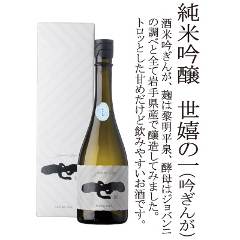
Junmai Ginjo · Gin Ginga
特別吟醸純米酒 世嬉の一 720ml(吟ぎんが)
Our starting point for a gently fragrant glass and a soft mouthfeel. Try it chilled, then alongside something to eat.
720 ml · 15% to less than 16% ABV · 50% rice-polishing ratio
View this sake in our Japanese store →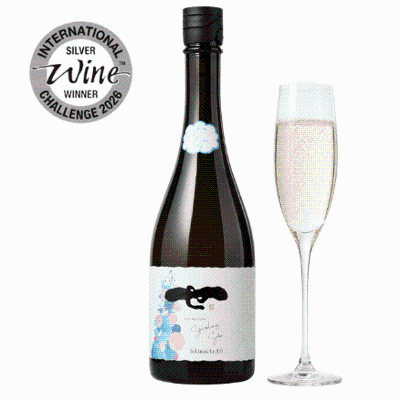
Sparkling Junmai
スパークリング世嬉の一 720ml
Naturally produced bubbles and restrained sweetness, for a meal or a toast. Chill well and follow the opening instructions.
720 ml · 15% ABV · 50% rice-polishing ratio
View this sake in our Japanese store →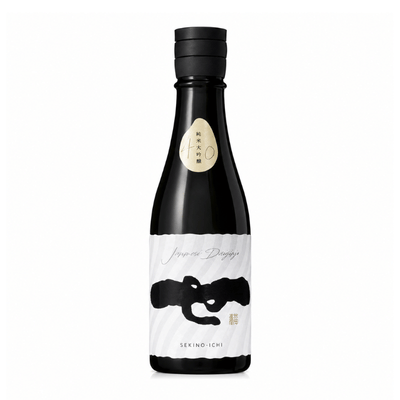
Junmai Daiginjo · Yui no Ka
純米大吟醸酒 世嬉の一 300ml(結の香)
A smaller bottle with a fragrant aroma, a little sweetness and a smooth texture. Take your time with a small glass.
300 ml · 15% to less than 16% ABV · 40% rice-polishing ratio
View this sake in our Japanese store →To compare two small bottles, see our 300 ml junmai daiginjo and sparkling junmai set. For a gently savoury glass with dinner, see our special junmai. Both links open Japanese product pages.
10. Ordering for an address in Japan.
Our online store provides delivery information for addresses in Japan. The shop is in Japanese; this English guide helps you choose a bottle and recognise the first steps. Check the current delivery charges, payment options and any product-specific conditions before placing your order.
- Check the name and volume. Match the Japanese name above to the product page, and check whether you are viewing 300 ml, 720 ml or a set.
- Read the age-confirmation question. あなたは20歳以上ですか? means “Are you aged 20 or over?” はい means yes; いいえ means no. Answer accurately.
- Choose the quantity. 数量 means quantity. カートに入れる means “Add to cart.” Check what you have selected before continuing.
- Review delivery and payment. Follow the Japanese store’s instructions for your address and preferred payment method. Confirm the order total, including delivery, before completing the order.
Refrigerated delivery, storage and delivery timing can depend on the product and destination. Use the current store guidance and the bottle label rather than assuming every sake has the same conditions.
Read our ordering and delivery guide (Japanese) →A few useful answers.
Does “junmai” mean alcohol-free?
No. It means that brewing alcohol has not been added as an ingredient. Alcohol is still produced during fermentation. Check the ABV on the bottle.
Is sparkling sake always sweet or low in alcohol?
No. Our sparkling sake is restrained in sweetness and contains 15% alcohol. Check each product’s description and label.
Do I need a special sake cup?
No. Start with a small glass you already have. We also suggest a wine glass when you want to explore the aroma of our ginjo-style sake.
How should I store an opened bottle?
Follow the storage instructions on that particular bottle. The label word 要冷蔵 means “keep refrigerated.” Choose a bottle size that fits how you plan to enjoy it; there is no single after-opening time limit given here for every sake.
Can I complete checkout in English?
The product and ordering pages linked from this guide are in Japanese. The ordering section above explains key words on the product page. Refer to the Japanese store guide for the current delivery and payment conditions.
About this guide
Written from the perspective of Sekinoichi Shuzo in Ichinoseki, Iwate. Adapted for readers living in Japan from our Japanese guide, updated 10 September 2026. Product details were checked against our official store on 12 September 2026; the store and bottle label remain the sources for current purchasing and storage information.